Source Waterproof Drawstring Backpack for Sports, Camping, Travel
Explore 30 options for a waterproof drawstring backpack suitable for sports, camping, and traveling. Buyers can compare features like customization, material, and capacity across suppliers in China to find the right gear for outdoor activities.
Key considerations
Products List




Comprehensive Sourcing Guide
Strategic Sourcing Guide for Waterproof Drawstring Backpacks
The global market for outdoor and promotional gear has seen a significant surge in demand for versatile, durable, and cost-effective carrying solutions. Among these, the waterproof drawstring backpack has emerged as a critical item for sports events, camping trips, student use, and corporate promotional campaigns. For procurement professionals, navigating the supply chain for these specific items requires a disciplined approach to verifying technical attributes, understanding cost structures, and ensuring compliance with international standards. This guide provides a structured framework for sourcing waterproof drawstring backpacks, relying on verified product attributes and industry best practices to mitigate risk and optimize value.
Technical Specifications and Material Composition
The foundation of a reliable waterproof drawstring backpack lies in its material composition and construction. Based on observed market data, the primary material for these products is polyester. This synthetic fiber is chosen for its inherent resistance to moisture, durability against abrasion, and ability to hold prints and logos effectively. The "waterproof" attribute is a key functional requirement, ensuring that contents remain dry during outdoor activities such as camping, traveling, or sports events. Buyers must verify that the polyester fabric used meets specific density and coating standards to guarantee true water resistance rather than mere water repellency.
Size and capacity are variable parameters that define the utility of the backpack. Market observations indicate a range of capacities, from "Medium" to "Big," with specific dimensions often cited as 35*40 cm or available as custom requests. The flexibility in sizing is a significant advantage for buyers with specific volume requirements. The closure mechanism is consistently identified as a drawstring type, which offers a simple, lightweight, and secure way to seal the bag. Some models also feature a backpack style configuration, offering dual-strap options for enhanced comfort during extended wear. The hardness of the material is typically "Soft," contributing to the bag's packability when not in use.
| Feature | Observation | Procurement Verification Point |
|---|---|---|
| Material | Polyester | Verify fabric GSM (grams per square meter) and coating type. |
| Functionality | Waterproof | Request water resistance test results or coating specifications. |
| Capacity | Medium to Big | Confirm exact dimensions (e.g., 35*40 cm) or custom requirements. |
| Closure | Drawstring | Check drawstring cord thickness and knot security. |
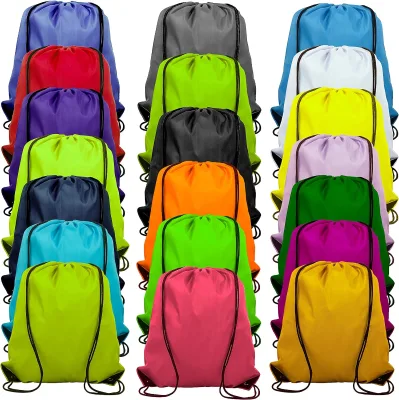
| Style | Simplicity / Candy Color | Review colorfastness and design consistency. |
Compliance, Certification, and Safety Standards
In the B2B sector, compliance is not merely a formality but a prerequisite for market access and liability protection. When sourcing waterproof drawstring backpacks, buyers must scrutinize the certifications held by potential suppliers. Observed data highlights several critical certifications, including CE, EU, LFGB, and CIQ. These certifications indicate that the product meets specific safety and environmental standards relevant to the European and international markets. For instance, LFGB is a German food safety standard that often applies to materials that may come into contact with skin or food, ensuring the absence of harmful substances.
Additionally, production standards such as ISO 9001:2008 and SGS verification are noted in the supply chain. These standards reflect a commitment to quality management systems and third-party inspection. While some suppliers may claim "Eco-Friendly" and "Reusable" features, buyers should request documentation to substantiate these claims, such as material safety data sheets or environmental compliance reports. It is important to distinguish between claimed features and verified certifications. For example, while "OEKO-TEX" is a recognized standard for textile safety, its specific application to a given product batch must be confirmed through valid certificates rather than assumed based on general market trends.
Buyers should also verify the "Standard Specifications" of the product. Some listings indicate "Custom Size" as a standard, while others adhere to "Standard Specifications Or Customized." This distinction is vital for inventory planning. If a buyer requires a specific regulatory compliance for a particular region, they must ensure the supplier's production line is certified for that specific standard. The presence of certifications like CE and CIQ suggests that the supplier has undergone rigorous testing, but the scope of these certifications must be explicitly defined for the specific product model.
Cost Drivers and Pricing Dynamics
Understanding the cost drivers for waterproof drawstring backpacks is essential for budgeting and negotiation. The observed price range in the market spans from $0.10 to $12.90 USD, a wide variance that reflects differences in material quality, customization complexity, and order volume. Several factors influence where a specific unit falls within this range. The primary driver is the level of customization. Products with "Customized" logos, specific color requests (such as "Candy Color" or "Multi Colors"), and unique printing methods like "Silk-Screen" or "Heat-Transfer Printed" will command higher prices than standard, off-the-shelf items.
Order volume is another critical cost determinant. The Minimum Order Quantity (MOQ) typically ranges from 100 to 2000 pieces, with some suppliers setting a standard MOQ of 1000 pieces. However, the market also features "Low MOQ" options, which can be advantageous for startups or promotional campaigns with smaller budgets. Buyers must balance the desire for lower unit costs against the need for smaller initial inventory. Larger orders generally reduce the per-unit cost due to economies of scale in material purchasing and production setup.
Packaging and logistics also contribute to the final cost. Observed packing methods vary from "1PCS/OPP Bag" to "400PCS/OPP Bag/Car" and "Standard Shipping Packaging or Customized." Customized packaging solutions, while adding value to the end product, increase the production time and cost. Furthermore, the origin of the product, primarily "China" with specific hubs in "Guangzhou" and "Putian," influences shipping costs and lead times. Buyers should factor in these logistical variables when calculating the total landed cost of the procurement.
Typical Applications and Usage Scenarios
The versatility of waterproof drawstring backpacks makes them suitable for a diverse array of applications. The "Suit for" attribute frequently lists "Outdoor," "Sports," "Camping & Traveling," and "Student" use. This broad applicability allows buyers to target multiple market segments with a single product type. For sports organizations, these bags serve as ideal gear carriers for athletes, offering a lightweight solution that can be easily stowed in lockers or backpacks. The "All" season designation indicates that these bags are functional year-round, provided the material quality is sufficient to withstand varying weather conditions.
Promotional use is another significant application area. The "Suit for: Promotion" attribute highlights the bag's utility as a marketing tool. Companies often utilize these backpacks for brand visibility, leveraging the "Customized" logo capability and "Silk-Screen" printing to display corporate branding. The "Eco-Friendly" and "Reusable" features align well with corporate social responsibility initiatives, making these bags attractive for green marketing campaigns. Additionally, the "Simplicity" style and "Candy Color" fashion elements appeal to younger demographics, including students and fashion-conscious consumers.
| Application Sector | Key Requirements | Recommended Features |
|---|---|---|
| Sports & Camping | Durability, Waterproofing | High-density polyester, reinforced drawstrings, large capacity. |
| Promotional Events | Brand Visibility, Cost | Custom logo printing, low MOQ options, vibrant colors. |
| Student Use | Lightweight, Affordability | Soft hardness, simple design, standard sizing. |
| Travel | Security, Compactness | Secure closure, water resistance, packable size. |
Supplier Evaluation and Production Capabilities
Selecting the right supplier requires a thorough evaluation of their production capabilities and business practices. The market data indicates that suppliers offer "OEM or ODM" services, allowing buyers to either manufacture products under their own brand or collaborate on original design. This flexibility is crucial for companies looking to differentiate their offerings. Buyers should assess the supplier's ability to handle "Custom Size" requests and their proficiency with various printing techniques like heat transfer and silk screening.
Lead times are a critical factor in supply chain planning. Observed production times range from 20 to 25 days, with sample turnaround times of 3 to 5 days. These timelines can vary based on the complexity of the order and the supplier's current workload. Buyers must confirm these lead times in writing and understand the factors that could cause delays, such as material shortages or design revisions. The "Sample" process is an essential step in quality assurance, allowing buyers to verify the physical attributes of the product before committing to a large order.
Supplier location is another consideration. While the general origin is "China," specific cities like "Guangzhou" and "Putian" are noted. These regions have established textile and manufacturing ecosystems, which can offer advantages in terms of supply chain efficiency and cost. However, buyers should verify the specific capabilities of the supplier within these locations. For instance, a supplier in Guangzhou might have different logistical advantages compared to one in Putian. It is also important to check the supplier's track record regarding "Qualified" advantages and their adherence to "Standard Specifications."
Quality Control and Long-Term Procurement Strategies
Ensuring consistent quality is paramount in long-term procurement. The "Disposable: Non-Disposable" attribute underscores the expectation of durability. Buyers should implement a robust quality control (QC) protocol that includes pre-production sample approval, in-process inspections, and final random inspections. Given the "Eco-Friendly" and "Reusable" claims, QC should also verify the integrity of the material to ensure it does not degrade quickly after repeated use. The "Durable and Lightweight" feature must be validated through physical testing to ensure the bag can withstand the rigors of its intended use without tearing or failing.
Long-term procurement strategies should focus on building strong relationships with suppliers who demonstrate reliability and flexibility. The ability to accommodate "as Your Request" changes in size, color, and packing is a valuable asset for buyers facing fluctuating market demands. Buyers should also consider the scalability of the supplier's operations. As order volumes grow, the supplier must be able to maintain quality and meet delivery deadlines. Establishing clear communication channels and agreeing on quality standards upfront can prevent disputes and ensure a smooth procurement process.
Finally, buyers should remain vigilant about changes in standards and regulations. The market is dynamic, and certifications like CE, EU, and LFGB may undergo updates. A proactive approach to compliance, involving regular audits and updates to supplier contracts, will help mitigate risks. By focusing on verified attributes, understanding cost drivers, and maintaining strict quality control, buyers can successfully source high-quality waterproof drawstring backpacks that meet their specific business needs and market demands.
FAQs
What material is used for waterproof drawstring backpacks?
These backpacks are primarily made of polyester, which offers inherent resistance to moisture and durability. The material is soft and lightweight, making it suitable for sports, camping, and student use while maintaining water resistance.
Can I request custom sizes for these backpacks?
Yes, custom sizes are available as a standard option for many models. Buyers can specify dimensions like 35*40 cm or request other measurements to fit specific volume requirements for promotional or personal use.
What certifications do these products typically hold?
Many suppliers provide products with CE, EU, LFGB, and CIQ certifications to ensure safety and compliance. Production standards often include ISO 9001:2008 and SGS verification to guarantee quality management systems.
How long does production take for custom orders?
Production time typically ranges from 20 to 25 days for standard custom orders. Sample preparation is faster, usually taking 3 to 5 days, allowing buyers to verify quality before committing to larger quantities.
What is the minimum order quantity for these bags?
The minimum order quantity generally ranges from 100 to 2000 pieces, with some suppliers setting a standard MOQ of 1000 pieces. Low MOQ options are available for buyers needing smaller initial inventory volumes.
Which printing methods are available for logos?
Silk-screen and heat-transfer printing are the primary methods used for customizing logos. These techniques allow for vibrant designs and ensure the logo remains durable and visible on the polyester fabric.